

Numbers and Counting
This strand of reasoning encompasses fundamental concepts, including numerosity, cardinality, and quantity. Pupils learn how to count forwards and backward as well as identify quantities on sight, e.g., counting dots.
IDL Numeracy is a math software that helps to improve the ability of those with dyscalculia and low-attaining learners in mathematics. To be inclusive, the lessons in IDL Numeracy are designed to reduce the stress those with dyscalculia would ordinarily feel when faced with mathematical problems. After a few hours using IDL Numeracy, learners will find a familiarity with the lessons. Because the lesson mechanics remain the same, they gain the confidence to tackle problems, even those they have never encountered.
Make An Enquiry Watch Our Video GuideYour IDL Numeracy Licence includes access to the Numeracy Screener and Multiplication Tables Check at no additional cost
A 2 product annual school bundle license provides unlimited user access to any 2 IDL products. This bundle includes home access for pupils.
Get QuoteUnlimited user access to IDL Numeracy. This includes the IDL Numeracy Screener, IDL Math Tutorials, IDL Multiplication Tables Check and home access for pupils.
Get QuoteSave money with an annual school bundle license and get unlimited user access to IDL Literacy, IDL Numeracy and IDL Wellbeing. This bundle provides access to IDL Screeners, Multiplication Tables Check and home access for pupils.
Get QuoteLearn more about the benefits of using IDL Numeracy.
The Numeracy software is used predominantly by learners with dyscalculia, although not limited to those with special educational needs. The software can also support any learners who struggle with math.
The software contains interactive elements, a detailed precision tracking system, and animated mathematical methods and principles guidance.
IDL Numeracy is an interactive mathematics resource designed to help children improve their numeracy skills.
The IDL Numeracy software resource contains:
Every lesson is designed to match individual targets and promote an overall understanding of mathematical methods. The program has eleven strands, each individually tracking a pupil’s ability in those principles.
For example, a student might be operating at the level of understanding of a 2nd-grade student when it comes to addition and subtraction but struggle with money problems, working at a 1st-grade level. IDL Numeracy will place them according to these strengths and weaknesses, providing more insightful feedback to teachers and boosting learners where needed.

This strand of reasoning encompasses fundamental concepts, including numerosity, cardinality, and quantity. Pupils learn how to count forwards and backward as well as identify quantities on sight, e.g., counting dots.

Pupils explore place value and decimal notation applications using our drag-and-drop interface and real-world problems to build competence.

Our program teaches pupils to efficiently and effectively add or subtract quantities in some core math operations. These lessons combine word problems, different representations of values, column methods, and many more variations.

Our strand curriculum guides pupils through formal written and mental methods to multiply and divide. Pupils experiment with grouping, factor pairs, and understanding the importance of commutativity.

Fractions are demonstrated in many methods, from easy-to-comprehend diagrams to decimals and equivalent fractions. The correlation between whole values and fractions of values is reinforced throughout.

Our weights and measures strand embeds understanding of negative values in temperature, equivalence in weights, and how real-life problems can be solved using rational methods. Students learn to read thermometers and experience related units of measurement.

The money strand of IDL Numeracy includes problems of a practical context to help build confidence and mental arithmetic skills. Students learn how to calculate total costs and change and use multiple denominations of coins to pay.

From analog to digital clocks, our time lessons show students how to read and solve clock-based problems. The lessons scaffold this knowledge into more complex problems based on duration, deductive reasoning, and conversion of values.

Orientation, translation, and symmetry are only a few of the skills demonstrated in these lessons. This strand begins with recognizing 2D and 3D shapes and the criteria thereof before moving on to comparing nets, coordinate locations, terminology, and overall spatial reasoning.

Problems require proportional awareness, sorting from most minor to most significant, and then expanding students’ deductive skills. These lessons include whole values and fractions, promoting numerical and shape pattern recognition.

This strand comprehensively covers data organization and charts and reads and compiles them. Students will learn to accurately understand a range of tables and charts, how and why they are used, and more. This strand also encompasses coordinates and plotting points to solve many problems.
Although the program includes various lessons, each is built to the IDL methodology to be accessible, engaging, and effective. The principles will always be the same; mathematical problems are presented in a fun and intuitive way. Each problem comes with auditory instructions and additional functions to help find the solution or simplify the puzzle. Each question is solved by moving items around the screen or by clicking on the right items, making it even more accessible to students with a range of difficulties across any platform.
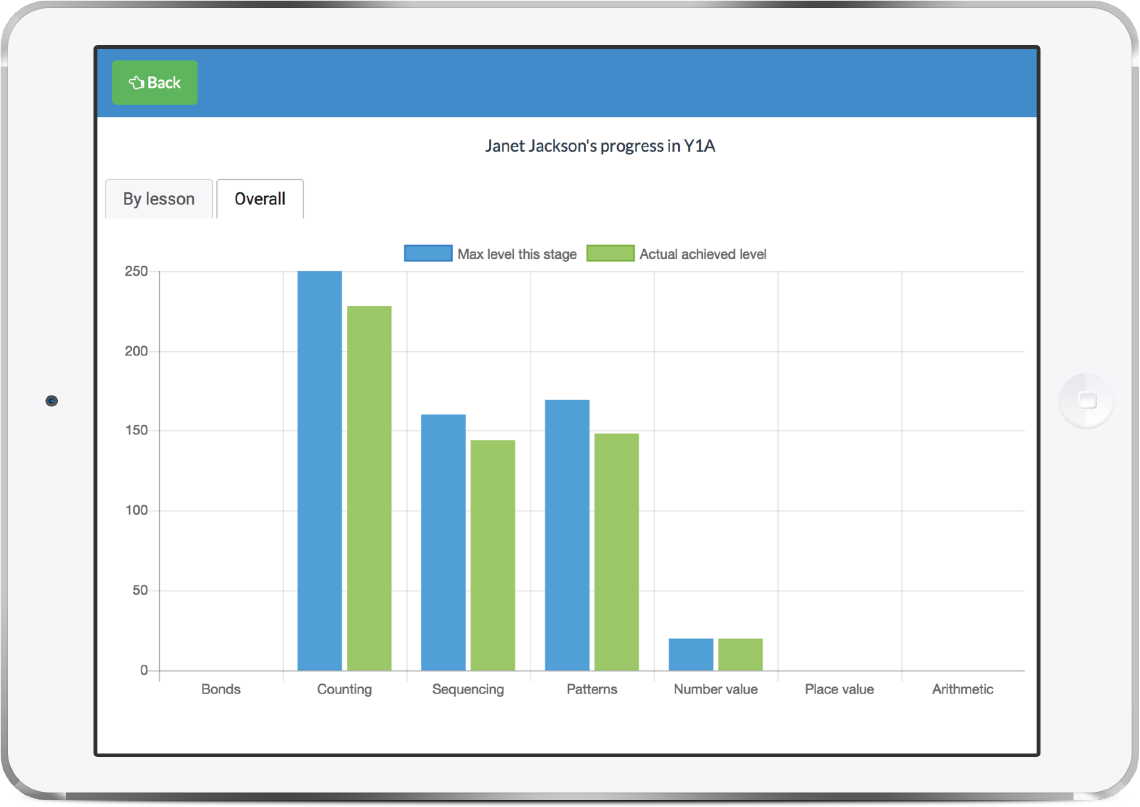
Every element is included with individual targets to monitor progress like never before. Student’ learning is no longer tied to a single linear progression but can exist at different levels on multiple strands of understanding – making it easier to isolate areas of difficulty and target interventions.

The IDL Numeracy Screener has been developed to provide a simple to use online test that will highlight any dyscalculic tendencies or number SEN.
Learn More

Math Tutorials are a new set of online math tutorials that present the main topics in the school curriculum in an easy-to-follow, step-by-step way.
Learn More

The IDL Literacy Intervention is a speaking-computer-based multi-sensory system that supports learners with dyslexia and other learning difficulties.
Learn More

The IDL Literacy Screener is a simple, effective online tool that can be used to highlight dyslexic-type difficulties.
Learn More

IDL Wellbeing is an exciting product designed to integrate with a whole-school approach to mental health, toughness and behavior management.
Learn More

It’s #NationalNumeracyDay! ✖️➕➗
This year’s theme is “Count on Your Community” and at IDL Numeracy we’re proud to support schools, teachers, and learners through our IDL Numeracy software.
IDL Numeracy is a maths resource designed to help improve the skills and confidence of low-attaining learners in mathematics, giving them the tools they need to tackle mathematical challenges with confidence.
Our wide range of numeracy resources can support learners with dyscalculia, dyslexia, and other maths difficulties, while also helping teachers with training and lesson planning. 🤩
Learn more and start your free, no-obligation trial here on our website www.idlsgroup.com
Try the brand new IDL Phonics software for FREE! ⭐
Be among the first to try the new IDL Phonics programme, an independent phonics learning tool suitable for pupils aged 4+. This brand-new multisensory programme is designed to help every child become a confident reader.
We’re offering schools the opportunity to try IDL Phonics free of charge until 1st September 2026 as part of our pilot programme.
Register your interest now to get an exclusive first look! 👉https://idlsgroup.com/phonics-page2/
#Phonics #SchoolPhonics
At IDL, we’re all about celebrating progress — big or small! 💪
Our comprehensive solutions help teachers deliver personalised learning experiences tailored to every student’s unique style and pace. 📖⭐
This Mental Health Awareness Week, we’re highlighting the strong connection between academic progress and emotional wellbeing. When pupils receive targeted support and experience small, steady successes, their confidence grows too. 💚
IDL software provides data-driven insights that make it easy to track progress and celebrate every achievement along the way. 🎉
Discover the IDL Wellbeing programme 👉 https://ow.ly/lReU50YYPFE
#MentalHealthAwarenessWeek
The IDL software can support both learners and teachers in overcoming the challenges they may face in the classroom. 🧑🏫
How can teachers benefit from using IDL in the classroom?
⭐Lesson support- IDL’s structured lessons and automated reporting free up valuable teacher time. 🙌
⭐Improved Learner Engagement- The multi-sensory approach and gamified elements of IDL make learning fun and engaging, motivating learners.
⭐Data-Driven Insights- IDL provides detailed progress reports, enabling teachers to track student performance and identify areas of difficulty.
Click here to secure your FREE trial 👉 https://ow.ly/IbHa50YY8JG
#teachertok #teachersofinstagram
This week is #MentalHealthAwarenessWeek and this year`s theme is all about taking action to support good mental health.
Academic progress and emotional wellbeing are closely connected. When pupils struggle with reading, writing or maths, the effects can reach well beyond the classroom, impacting confidence and self-esteem.
By taking action early and providing the right literacy and numeracy support, pupils can build confidence and become more willing to try again. Over time, these positive learning experiences can play an important role in improving emotional wellbeing.
Discover the IDL Wellbeing programme 👉 https://lnkd.in/e9vFDhR2